Who Owns AI-Created Innovations? Understanding AI and Intellectual Property Rights
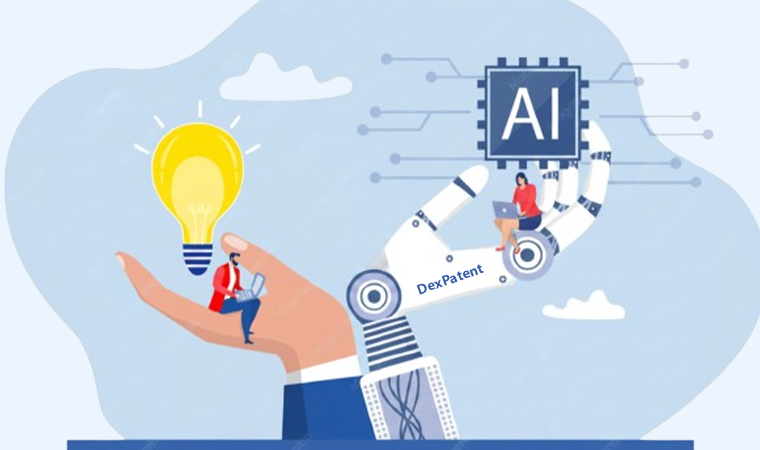
Artificial intelligence (AI) is no longer a distant “futuristic” idea, it is now embedded in labs, design studios, and software pipelines, actively generating new inventions, creative works, and functional code. This shift forces a critical question for inventors, R&D teams, and business owners: who owns the intellectual property (IP) when AI participates in or even drives the creative or inventive process?
From patents on AI‑assisted drug‑discovery and machine‑learning‑based control systems, to copyright in AI‑generated images, music, and text, the traditional IP frameworks are being strained. Core concepts such as inventorship, authorship, originality, and technical effect are being re‑examined in courtrooms, patent offices, and policy debates. In some jurisdictions, the rules are being reinterpreted; in others, they are being quietly updated through guidelines and administrative practice. For anyone building or using AI‑enabled innovations, understanding how IP law adapts to AI is no longer optional, it is a strategic necessity.
How AI intersects with patents
When an AI‑enabled system helps design a new drug molecule, optimise a semiconductor layout, or configure a manufacturing‑control algorithm, the output is typically a technical solution to a technical problem. Under classic patent doctrine, what really matters is whether the invention is novel, non‑obvious, and industrially applicable, not who or what “came up with” the idea. However, the formal requirement that an inventor must be a natural person has created a doctrinal tangle at the heart of modern AI‑driven innovation.
Consider the now‑famous DABUS case, where an AI system named DABUS was listed as the sole inventor in patent applications for a food‑storage device based on beverage‑container geometry and a warning‑light‑based emergency signal. Patent offices in the US, UK, Europe, and South Korea all rejected those applications, insisting that an “inventor” must be a human being. Courts and offices have generally held that the user or developer of the AI, the person who framed the problem, set the parameters, selected the training data, and interpreted the AI’s outputs should be treated as the legal inventor, not the AI itself.
AI‑related inventions and subject‑matter eligibility
Beyond inventorship, a second layer of difficulty is subject‑matter eligibility. Many jurisdictions historically exclude “abstract schemes” or “rules and methods of mental activity” (for example, pure mathematical formulas or business‑logic algorithms) from patent protection.
Modern AI‑related inventions, however, often sit at the boundary: consider a neural network-based power management algorithm that dynamically tunes a smartphone’s CPU and screen to maximise battery life. If the claim is framed as “a neural network that learns user behaviour,” it may look like a mere algorithm. But if the specification clearly links the AI module to concrete hardware (battery, sensors, thermal management circuitry) and measurable technical effects (reduced power draw, lower heating, longer uptime), the same invention can be treated as a technical solution and thus patent‑eligible.
China and the European Patent Office (EPO), for instance, now emphasise that AI‑related inventions must solve a technical problem using technical means and demonstrate a technical effect (for example, faster processing, fewer errors, better resource utilisation). Merely saying “we use machine learning” without tying it to such effects is unlikely to pass muster.
AI and Patent Protection in India
India currently follows the principle that an inventor must be a natural person. While the Indian Patents Act, 1970 does not expressly address AI inventorship, patent applications require the identification of human inventors. Further, Section 3(k) excludes mathematical methods, business methods, algorithms, and computer programs per se from patentability. Accordingly, applicants seeking protection for AI-related inventions should focus on demonstrating a technical application, technical effect, and practical implementation rather than merely claiming an AI model or algorithm. Careful drafting that highlights the interaction between AI and technical systems can significantly improve patentability prospects in India.
Copyright and AI‑generated content
While patents focus on inventions, copyright is tripping over AI‑generated text, images, and music. The US Copyright Office has held that works produced solely by AI, without meaningful human authorship, are not protectable under copyright, because the US system requires a human author. By contrast, some other jurisdictions are more flexible in practice: the Beijing Internet Court has described generative‑AI output as the result of human intellectual investment when a person selects prompts, curates results, and integrates them into a creative work.

At the same time, generative AI platforms face infringement allegations when they are trained on copyrighted works without explicit permission. In the US, several authors and artists have sued major AI companies, arguing that their books and artworks were used in training data, effectively creating unlicensed derivatives.
At the same time, another emerging issue concerns the datasets used to train AI models. Many generative AI systems are trained on vast quantities of text, images, music, software code, and other copyrighted materials. This has led to ongoing legal disputes regarding whether the use of such materials for AI training constitutes copyright infringement, fair use, or a separate category of lawful activity. As AI adoption grows, the ownership and licensing of training data are expected to become increasingly important aspects of intellectual property strategy.
What this means for you as an inventor or business
If you are using AI to:
- optimise a mechanical or electrical system,
- design molecules, materials, or formulations, or
- refine software architectures or data‑processing pipelines,
then the default strategic posture should be:
- Draft the patent application to emphasise technical problem, technical solution and measurable technical effect, not just the AI algorithm.
- Record the human role clearly: who defined the problem, chose the data, designed the AI architecture, and validated the results. This strengthens your position on inventorship.
- Where AI‑generated content is used (art, text, music), document how humans filtered, edited, and arranged the outputs so that you can argue for human authorship in copyright.
In short, AI is reshaping the IP landscape, but it is not (yet) replacing the need for human‑centred legal strategies. For inventors and entrepreneurs, the key is to treat AI as a powerful tool and anchor your rights in clear, well‑drafted, human‑centred IP protection.
The Road Ahead
As AI capabilities continue to evolve, policymakers and courts worldwide are actively examining whether existing intellectual property frameworks adequately address AI-assisted innovation and creativity. While current laws largely require human inventors and authors, future reforms may introduce new approaches for recognising and regulating AI-generated outputs. Businesses and innovators should therefore monitor legal developments closely and adapt their IP strategies accordingly.
Conclusion
Artificial intelligence is no longer a theoretical curiosity, it is actively contributing to inventions, designs, and creative works across industries. Yet, the core structure of intellectual property law remains grounded in human agency: inventors must be natural persons, authors must exercise human creativity, and technical solutions must be tied to tangible, measurable effects.
For now, AI is best viewed as a powerful tool rather than a legal creator. To secure strong IP protection, inventors and businesses should focus on documenting human contributions emphasising technical implementation and technical effects, and maintaining clear records throughout the innovation process. Those who align their AI strategies with existing IP requirements will be best positioned to protect and commercialize their innovations as the legal landscape continues to evolve.













0 Comments